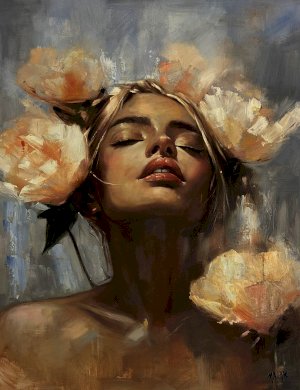


Aidan Phelan is a contemporary British artist emerging from the creative heart of Soho, London, where his practice engages directly with the pulse of modern culture. His work explores the tensions of contemporary society through bold colour, sharp symbolism, and a distinct pop-art sensibility. Phelan’s debut solo exhibition, Reflections of a Broken Mirror (March 2025), introduced forty striking works that examine social and political realities with both urgency and wit. Each piece reflects his ability to distill complex issues into visually arresting compositions that feel immediate and culturally resonant. With thought-provoking titles such as Justice (Turquoise) and Make Britain Safe Again, Phelan pushes viewers to confront the narratives shaping everyday life. His approach blends critical observation with expressive clarity, creating work that is both aesthetically impactful and intellectually charged. Through this combination of boldness and introspection, he has quickly established a compelling artistic language that speaks to the contradictions of the present moment. As his career evolves, Phelan is emerging as one of the most distinctive and powerful new voices in contemporary British art.

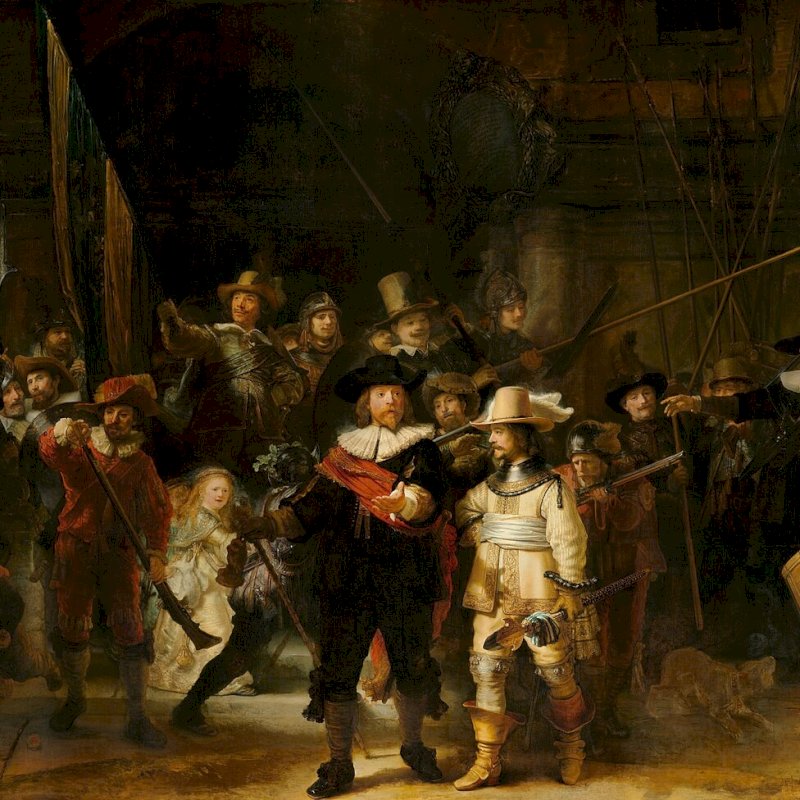
Rembrandt van Rijn was a Dutch Golden Age master whose profound exploration of light, emotion, and human psychology made him one of the most influential artists in Western history. His paintings and etchings reveal an unparalleled sensitivity to the complexities of the human condition, capturing vulnerability, dignity, and introspection with extraordinary depth. Rembrandt’s mastery of chiaroscuro — the dramatic interplay of light and shadow — transformed ordinary scenes into powerful narratives infused with spiritual and emotional resonance. His portraits, whether of patrons, historical figures, or himself, are marked by an honesty that transcends idealisation, offering intimate studies of character and truth. Throughout his career, he pursued innovation in composition and technique, using textured impasto and expressive brushwork to create surfaces alive with movement and atmosphere. His biblical scenes and group portraits, including the celebrated Night Watch, showcase his ability to weave storytelling and dramatic tension into monumental works. Despite periods of financial hardship and personal loss, Rembrandt continued to refine his artistic vision, producing late works of remarkable subtlety and wisdom. Today, he is revered as a pioneer of psychological realism, a master of light, and a universal storyteller whose legacy continues to shape the language of painting.
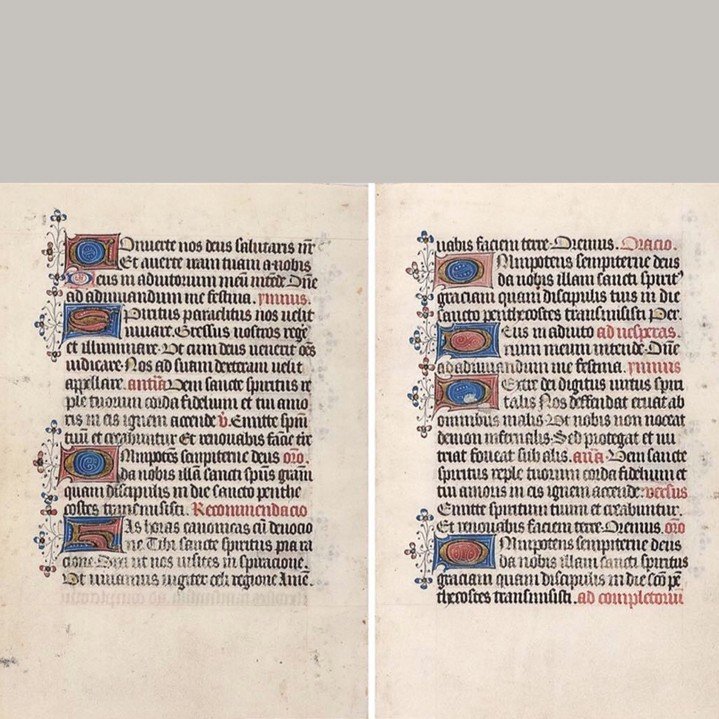
This illuminated leaf comes from a medieval Book of Hours, a devotional manuscript created between the 14th and 16th centuries when such texts were central to private Christian worship. Crafted by highly skilled but often anonymous scribes and illuminators, these books combined spiritual purpose with exquisite artistry. The page features Gothic script, richly decorated initials, and delicate marginal ornamentation, reflecting the visual sophistication of late medieval manuscript production. Each element—from the meticulous lettering to the vibrant pigments—demonstrates the careful craftsmanship associated with monastic and early workshop traditions. Books of Hours were personalised objects, tailored for wealthy patrons who sought both aesthetic beauty and devotional guidance in their daily rituals. The text itself follows the rhythm of liturgical prayer, offering moments of contemplation through its structured sequence of hymns, psalms, and supplications. Despite the anonymity of its maker, the leaf embodies a cultural and artistic legacy that shaped European bookmaking for centuries. Today, it stands as a testament to the enduring power of medieval illumination and the intimate relationship between art, faith, and personal devotion.